Hey there! I’m a supplier of aluminum profile cable trays, and I often get asked about the relationship between the size of these cable trays and their cable capacity. So, I thought I’d share my insights in this blog post. Aluminum Profile Cable Tray
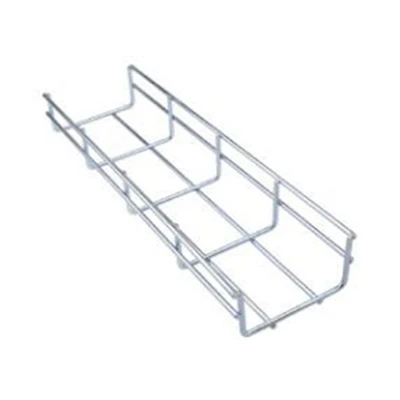
Let’s start with the basics. What are aluminum profile cable trays? Well, they’re basically structures made from aluminum profiles that are used to support and route electrical cables in various settings, like industrial plants, commercial buildings, and even some residential areas. They’re popular because aluminum is lightweight, corrosion – resistant, and has good strength.
Now, when it comes to the size of these cable trays and the cable capacity, it’s not a one – size – fits – all situation. There are a few key factors that come into play.
Tray Width
The width of the cable tray is a major determinant of how many cables it can hold. A wider tray obviously has more room for cables side by side. For example, if you have small – diameter control cables, a narrow tray might be sufficient. But when you’re dealing with large – gauge power cables, you’re going to need a wider tray.
Let’s say you’re working on a project that involves a lot of low – voltage control cables. A 6 – inch wide cable tray might be able to hold a decent number of them. But if you switch to high – voltage power cables, which are much thicker, you might need a 12 – inch or even 18 – inch wide tray. It’s all about making sure that there’s enough space for the cables so that they don’t get overcrowded. Overcrowding can lead to a bunch of problems, like poor heat dissipation, which can cause the cables to overheat and potentially fail.
Tray Depth
The depth of the cable tray is also crucial. It determines how many layers of cables you can stack. A deeper tray allows for more layers of cables, which means a higher overall cable capacity. However, you can’t just stack cables willy – nilly. There are some rules and guidelines to follow.
In general, you want to make sure that the cables have enough space to breathe. Cables generate heat when they’re in use, and if you stack them too closely together, the heat can build up. For instance, if you have a tray that’s only 2 inches deep, you might only be able to stack one or two layers of cables. But if you have a 6 – inch deep tray, you can stack more layers, as long as you follow the proper spacing requirements. This spacing helps to ensure that the cables can operate at safe temperatures.
Cable Size and Type
The size and type of the cables you’re using also affect how many of them can fit in a cable tray. Different cables have different diameters and physical properties. For example, coaxial cables are typically thicker and more rigid compared to some types of Ethernet cables.
If you’re using large – diameter fiber optic cables, you’ll need more space in the cable tray compared to when you’re using thin, flexible data cables. Also, the insulation on the cables matters. Some cables have thicker insulation, which takes up more space. So, when you’re planning the cable capacity of a tray, you need to take into account the actual size of the cables, including their insulation.
Fill Ratio
The fill ratio is an important concept when it comes to cable capacity in a tray. It refers to the percentage of the cross – sectional area of the cable tray that’s occupied by the cables. Most industry standards recommend a fill ratio of around 40% – 50%. This is to ensure that there’s enough space for proper ventilation and future cable additions.
Let’s say you have a cable tray with a cross – sectional area of 100 square inches. If you follow a 40% fill ratio, you should only fill it with cables that take up 40 square inches of that area. This might seem like a lot of empty space, but it’s necessary for the long – term reliability of the cable system.
Calculating Cable Capacity
Calculating the cable capacity of an aluminum profile cable tray isn’t an exact science, but there are some general steps you can take. First, you need to know the dimensions of the cable tray (width and depth). Then, you need to measure the outer diameter of the cables you’re going to use.
You can start by calculating the cross – sectional area of the cable tray. For a rectangular tray, it’s simply the width multiplied by the depth. Then, for each type of cable, calculate its cross – sectional area using the formula for the area of a circle (since most cables are circular in cross – section: A = πr², where r is the radius of the cable).
Once you have these areas, you can start to figure out how many cables can fit based on the fill ratio. For example, if the cross – sectional area of the tray is 200 square inches and you’re aiming for a 45% fill ratio, the available area for cables is 200 x 0.45 = 90 square inches. If each cable has a cross – sectional area of 2 square inches, you can theoretically fit 90 / 2 = 45 cables. But remember, this is a very simplified calculation, and you also need to consider things like cable spacing and the physical arrangement of the cables in the tray.
Real – World Applications
In a real – world scenario, let’s say you’re working on an industrial automation project. You have a mix of power cables, control cables, and Ethernet cables. You need to choose the right size of cable tray to accommodate all these cables.
You start by listing the types and sizes of the cables. Then, you calculate the approximate cross – sectional area they’ll occupy. Based on this, you can select a cable tray with an appropriate width and depth. For example, if you have a large number of power cables, you might choose a wide and deep tray to ensure that they have enough space and that heat can be dissipated properly.
Benefits of Choosing the Right Size
Choosing the right size of aluminum profile cable tray for your cable capacity needs has several benefits. Firstly, it ensures the safety of the cable system. When cables have enough space, they’re less likely to overheat, which reduces the risk of electrical fires and equipment failures.
Secondly, it makes installation and maintenance easier. If the tray is too small, it can be a real pain to install the cables, and it can also be difficult to access them for maintenance. On the other hand, a properly sized tray allows for easy installation and quick access to the cables when needed.
Finally, it provides room for future expansion. As your business grows or your electrical system evolves, you might need to add more cables. A tray that’s sized correctly from the start can accommodate these future changes without the need for major upgrades.
Conclusion

So, as you can see, the relationship between the size of aluminum profile cable trays and cable capacity is complex and depends on several factors, including tray width, depth, cable size and type, and the fill ratio. By understanding these factors and doing the proper calculations, you can choose the right cable tray for your project.
Industrial Cable Tray If you’re in the market for aluminum profile cable trays and want to discuss your cable capacity needs, I’d love to have a chat with you. Whether you’re working on a small residential project or a large – scale industrial installation, I can help you find the perfect cable trays for your requirements. Just reach out, and we can start the conversation about how to get your cables properly supported and routed.
References
- Electrical Installation Handbook, Schneider Electric
- National Electrical Code (NEC)
- Cable Tray Manufacturers Association (CTMA) Standards
Hebei Jinglang Industrial Co., Ltd.
As one of the most professional aluminum profile cable tray manufacturers and suppliers in China, we also support customized service. We warmly welcome you to wholesale high quality aluminum profile cable tray in stock here from our factory. If you have any enquiry about quotation, please feel free to email us.
Address: Nanxinzhuang Village, Daweihe Hui and Manchu Township, Wen’an County, Langfang City, Hebei Province
E-mail: 18231629992@163.com
WebSite: https://www.jinglangcabletray.com/
