If you’re in the market for profile machines, chances are you’ve spent hours scrolling through supplier websites, sifting through product specs, and wondering: Why do some of these machines cost a few thousand dollars, while others run into six figures? As a supplier of industrial profile machines, I get this question at least a dozen times a week. Every engineer, fabricator, or metalworking shop owner I talk to wants a clear, no-BS breakdown of what they’re actually paying for—and what that price gets them. No hidden fees, no fine print, just the real deal. Over the past 12 years in this industry, I’ve helped hundreds of customers from small startups to large manufacturing plants find the right profile machine, so let’s cut through the confusion and talk about the actual price ranges, what drives them, and how to know where you fit. Profile Machine
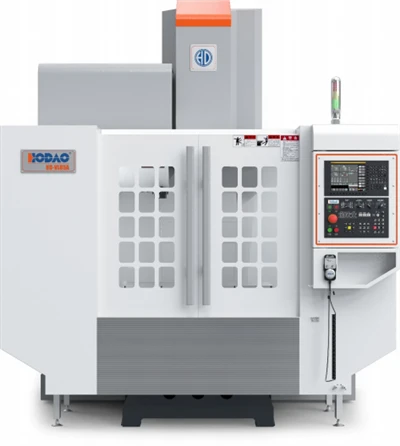
First, let’s start with the basics to make sure we’re on the same page. A profile machine (sometimes called a profile bending machine, profile rolling machine, or section bending machine) is used to form metal, plastic, or composite profiles into curved or contoured shapes. Think I-beams, angle iron, pipe, channel steel, or even custom aluminum extrusions—these machines bend them consistently, accurately, and without warping or cracking, which is critical for industries like construction, aerospace, automotive, signage, and structural fabrication.
Now, the price range for profile machines isn’t a single number; it’s a spectrum that spans roughly $2,500 on the low end all the way up to $180,000 on the high end. The gap is huge, but that’s because these machines aren’t one-size-fits-all. The biggest factors that determine price are what material you’re bending, the size of the profiles, the accuracy you need, and how often you’ll be using the machine (its duty cycle). Let’s break this down by tier, so you can see exactly what you get at each price point.
Starting with the entry-level tier: $2,500 to $15,000. These are small, manual or semi-automatic profile machines designed for light, low-volume work. I’ll be honest—these aren’t meant for heavy production. Most entry-level models are manual, meaning you have to adjust the rollers, feed the profile, and monitor the bend with your hands. They’re great for small shops, hobbyists, or businesses that need to bend light-gauge aluminum, thin steel pipe, or small angle iron up to 2 inches in height, on a few pieces a week. For example, a local sign shop that bends 1-inch aluminum strips for storefront letters might only need an entry-level machine. The pros here are low upfront cost, simple operation, and no need for a team of operators. The cons? They can’t handle heavy material, their accuracy is only about ±1/32 of an inch (good for basic work, but not for aerospace or high-precision parts), and they’re not built for constant use. If you run 100 pieces a day, an entry-level machine will break down or wear out in a year. I see a lot of new shops make the mistake of buying this tier to save money, only to outgrow it in six months and have to spend more on a better machine. That’s why I always ask new customers: “What’s your average daily production volume?” before I even suggest a model.
Next, the mid-range tier: $15,000 to $85,000. This is the sweet spot for most small to medium manufacturing shops and structural fabricators. These machines are semi-automatic or fully automatic, with features like hydraulic roller adjustment, digital readouts (DROs) that show you exact bend angles, and programmable settings to repeat the same bend hundreds of times with consistent accuracy. The material capacity here jumps too—mid-range machines can handle profiles up to 8 inches in height, heavy-gauge steel, solid aluminum bars, and even small pipe up to 10 inches in diameter. Accuracy is way better, too—most mid-range models offer ±0.015 inches, which is enough for parts that need to fit together perfectly, like automotive frames or prefabricated construction components. The duty cycle on these is 8 to 12 hours a day, so they’re built for regular, reliable use. A lot of my regular customers run in this tier: for example, a fabricator that makes metal support beams for residential construction, or a small aerospace parts shop that needs to bend titanium profiles for aircraft interiors. I personally recommend this tier for 70% of the customers I talk to, because it balances cost, capability, and longevity. You’re not overpaying for features you don’t need, but you’re not buying a machine that will hold you back as you grow.
Then there’s the high-end, industrial-grade tier: $85,000 to $180,000. These are the behemoths for large-scale manufacturing, aerospace, defense, and heavy structural projects like bridge construction or wind turbine components. These machines are fully automatic, with CNC control systems that let you program entire production runs in minutes, adjust for material variations in real time, and handle massive profiles up to 24 inches in height, heavy steel I-beams, solid steel bars, and thick-wall pipe. Accuracy here is insane—some models get down to ±0.005 inches, which is required for parts that need to meet strict aerospace or military standards. The duty cycle is 24/7 for these machines, built to run non-stop for months without major maintenance. For example, a company that makes wind turbine towers might use these to bend the curved sections of the tower, or a defense contractor that produces heavy armored vehicle components. The downside, obviously, is the cost—these machines are a huge investment, so you only buy one if you have consistent, high-volume work that demands that level of performance. I only sell a few of these a year, and they’re almost always to large, established clients with long-term contracts.
Now, I know what you’re thinking: “Okay, that range helps, but how do I not overspend on a machine that’s too fancy for my needs?” That’s the question I get asked most, and it’s one I take seriously as a supplier. The first rule is to be honest about your needs, not just your budget. Let’s say you have a shop that bends 4-inch angle iron for custom gates, 20 pieces a day. An entry-level manual machine is fine—you’ll never need the extra features. But if you’re bending 8-inch channel steel for commercial building facades, 200 pieces a day, the entry-level machine will leave you with inconsistent bends, slow production, and downtime when it breaks. Another big factor is add-ons. A lot of suppliers will quote you a base price, then nickel and dime you for things like material supports, safety guards, CNC software upgrades, or training. At my company, we include basic operator training, safety guards, and a 1-year parts warranty in every machine quote—no hidden fees. Some competitors charge extra for that, which is why a quote that seems cheaper at first might actually end up costing more.
Wait, but what about used machines? I get asked about used profile machines all the time, too. A good used mid-range machine might cost half the price of a new one, but there’s a catch: most used machines don’t have the latest safety features, their wear parts (like rollers) might be near the end of their life, and you’ll have no warranty. I’ve seen customers buy a used machine for $7,000, only to spend $5,000 on repairs and rollers within six months, and end up with a machine that’s outdated. For small to medium shops, a new mid-range machine is usually a better investment, because it comes with support, warranty, and is built to last. Used might be an option if you’re a hobbyist with very light use, but even then, I’d recommend buying from a reputable supplier who can inspect it before you commit.
Another thing that affects price is customization. If you need a profile machine that can bend a specific shape, like a custom hollow section or a rare composite material, that will add to the cost. Standard machines are built for common profiles (I-beams, angle iron, pipe), but if you have a unique requirement, we have to design custom rollers, adjust the hydraulic system, and program special features, which adds time and cost. That’s why I always ask customers to send me drawings of the profiles they’ll be bending, even if they’re just rough sketches— that way, I can give you an accurate quote, not a generic range.
Let’s talk about hidden costs, too, because this is where a lot of people get burned. Shipping is a big one—profile machines are huge, so shipping a 5,000-pound mid-range machine can cost $1,000 to $3,000, depending on where you’re located. Installation and setup is another: most machines need to be anchored to the floor, calibrated, and tested, which can take a day or two and add $500 to $1,500 to the total. Operator training is important, too—if you’re not familiar with profile bending, a $500 training course is worth every penny to avoid ruining parts or damaging the machine. I include all of these in my quotes, so there are no surprises when you get the final number.
Wait, but is there a way to get a better price without sacrificing quality? Absolutely. The biggest tip I can give is to buy from a supplier that specializes in profile machines, not a general industrial equipment dealer. General dealers often mark up prices because they have to cover their overhead, while specialists build relationships with manufacturers and offer fair pricing because that’s all they do. I also offer flexible financing for customers who don’t want to pay the full amount upfront, with terms that fit small business budgets. A lot of customers don’t realize that you don’t have to pay cash for a machine—we have financing options that let you pay monthly, starting as low as $300 a month for entry-level models, depending on the total price.
Let me share a quick customer example to make this real. Last year, I worked with a small fabrication shop that made custom railings and metalwork for residential and commercial projects. They were using a manual press brake to bend thin aluminum strips, and it was taking them twice as long as it should, with lots of scrap parts from inconsistent bends. They came to me with a budget of $10,000, but I looked at their production volume—they were doing about 50 pieces a week, mostly 1 to 2 inch aluminum and small angle iron. That entry-level range was enough for them, right? No, wait—they told me they were planning to grow to 200 pieces a week in the next year, so an entry-level model would only last them a few months. Instead, I quoted them a refurbished semi-automatic mid-range machine for $12,500, which fit their current needs and their upcoming growth. They jumped at it, and a year later, they told me their production time was down 40%, scrap was down 25%, and they’d already paid off the machine in new business. That’s the kind of advice I give every customer—don’t just buy for today, buy for the next 2 to 3 years.
Now, I want to be transparent about what you should expect from a supplier. If someone gives you a price of $5,000 for a hydraulic profile machine, run—because that’s likely a manual machine that’s been sitting in a warehouse for 20 years, with no safety guards, no warranty, and it can only bend thin aluminum. If someone quotes you $100,000 for a machine that only bends 4-inch profiles, that’s probably inflating the price with unnecessary features you don’t need. The key is to work with a supplier who will ask you questions: what material, what size, how many pieces a day, what accuracy do you need, what’s your budget, and what are your future plans. No two customers have the same needs, so no two quotes should be identical.
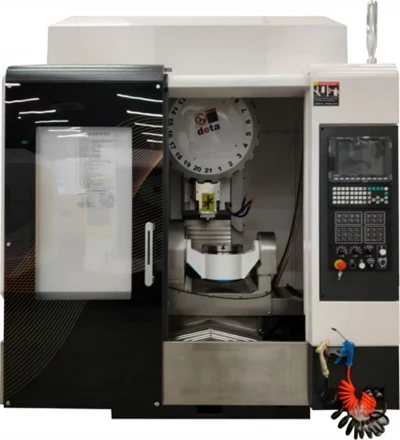
At the end of the day, a profile machine is an investment in your business. It’s not just a piece of equipment—it’s what lets you take on bigger projects, work faster, make fewer mistakes, and grow. The last thing I want is for a customer to overspend on a machine they don’t need, or buy a cheap one that holds them back. If you’re ready to talk through your needs, get a customized quote, or even just ask questions about the price ranges or features, don’t hesitate to reach out. I’m here to help you find the right profile machine for your business, no pressure, no fine print.
Engraving and Milling Machine References
- Industrial Metalworking Equipment Association. (2022). Global Profile Machine Market Report: Segment Analysis by Product Type, Application, and Region.
- Fabricators & Manufacturers Association International. (2023). Best Practices for Profile Bending in Small to Medium Shops.
- Machine Tool Trade Association. (2022). Quality Standards for Industrial Profile Machines and Performance Metrics.
Taizhou Qiyang Trading Co., Ltd.
As one of the most professional profile machine manufacturers and suppliers in China, we’re featured by quality products and good price. Please rest assured to buy bulk profile machine for sale here and get quotation from our factory. Customized orders are welcome.
Address: Zhenhai Village, Binhai Town, Wenling City, Taizhou City, Zhejiang Province
E-mail: qycncmachine@outlook.com
WebSite: https://www.qycncmachine.com/
