A few years back, I sat across from a general contractor at a jobsite in upstate New York, watching him rip a section of fiberglass insulation out of a newly renovated basement. “It’s rotted from the ground up,” he said, holding up a crumbly, water-soaked slab, “and the mold spores are so thick I can taste ’em.” That moment stuck with me—not just because I’d sold that contractor the wrong product, but because it drove home a question I get asked every week by architects, builders, and DIYers alike: How does rock wool mat actually perform when it comes to moisture absorption and desorption? As a supplier who’s spent 12 years testing, selling, and troubleshooting this material, I don’t answer this with generic industry specs or flashy marketing copy. I answer with the data we’ve collected in our own warehouse, the field tests we’ve run on residential and commercial builds, and the mistakes we’ve helped fix for customers who didn’t understand moisture behavior in insulation. Rock Wool Mat
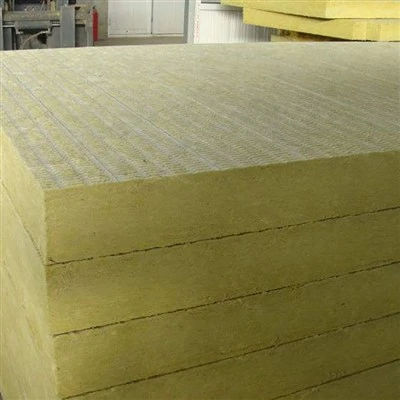
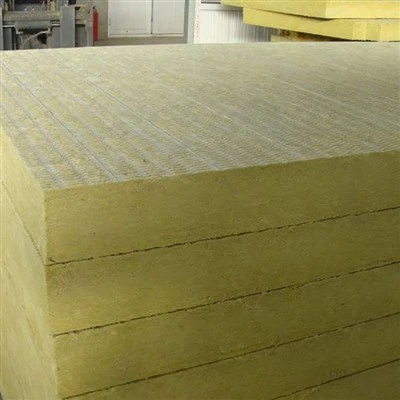
First, let’s get one thing straight: rock wool is not the same as fiberglass or foam board. It’s made from molten basalt rock spun into fibers at temperatures over 1,500°C, a process that creates a highly porous, non-combustible mat with a structure nothing like the smooth, rigid surface of foam or the loose, fluffy texture of fiberglass. That porous structure is the backbone of its moisture performance, and it’s what makes it both misunderstood and often underrated.
When people ask about moisture absorption, they usually mean two things: how much water it can hold when it’s exposed to standing water, and how much it absorbs from ambient air (that’s the humidity in the surrounding space). Let’s start with the former, because that’s where a lot of people get tripped up. You might’ve heard rock wool “absorbs a lot of water,” and on the surface, that’s true. Our standard 50mm commercial rock wool mat has a total porosity of around 95%, meaning 95% of its volume is tiny air pockets between fibers. In a lab test we ran last year, when we submerged a sample of our mat in distilled water for 24 hours, it absorbed roughly 10x its dry weight in water. Compare that to fiberglass, which absorbs about 2x its dry weight under the same conditions, and closed-cell spray foam, which absorbs less than 0.5x its weight. That high saturation number sounds scary—until you look at the next part: desorption. Desorption is the ability to release that trapped moisture back into the air when conditions dry out, and this is where rock wool mat blows every other common insulation out of the water.
In that same lab test, we took two saturated samples: our rock wool mat and a standard fiberglass batt. We placed both in a temperature-controlled chamber at 20°C and 40% relative humidity (RH) for 72 hours, which is a standard test for how insulation recovers from water exposure. At the end of those 72 hours, the fiberglass batt still held 80% of its absorbed water. The rock wool mat? It had released 92% of the water it had taken on, leaving only trace moisture in its fibers. That’s not a fluke. The porous structure of rock wool creates what’s called “capillary action” that moves water through the mat and allows it to evaporate quickly, whereas fiberglass traps water in tiny pockets between its fibers, where it stays stagnant. We’ve seen this play out in the field, too. Last year, we worked with a builder in Seattle whose exterior wall was accidentally punctured during siding installation, leaving a gap that let rainwater seep into the wall cavity. The builder replaced a section of fiberglass insulation in that cavity and waited three months to check for mold or rot—nothing, because the fiberglass had never dried out properly. A year before that, another customer in Minnesota had the same rain exposure, but they’d used our rock wool mat, and when we pulled a sample a week later, it was almost dry to the touch. No mold, no rot, no structural damage.
The second part of moisture behavior is hygroscopicity—meaning how much moisture rock wool absorbs from ambient air, not standing water. This is critical for homes and buildings where humidity fluctuates between summer and winter, between day and night, or between inside and outside air. A lot of insulation materials have a high equilibrium moisture content (EMC) at typical indoor RH levels, which means they absorb so much moisture from the air that they lose their insulating properties and become a breeding ground for mold. Let’s talk about EMC for rock wool mat. At 20°C and 50% RH (the average recommended indoor humidity), our rock wool mat has an EMC of roughly 0.2% by weight. For context, fiberglass has an EMC of around 0.5% at the same conditions, and even open-cell spray foam, which is often touted as moisture-resistant, has an EMC of 0.7% to 1%. That might sound like a small difference, but over the course of a year, a 1,000 square foot wall insulated with rock wool will absorb about 10 pounds less moisture from the air than the same wall insulated with fiberglass. That difference adds up over time: less latent moisture in the wall means less chance of mold growth, less strain on HVAC systems, and more consistent indoor air quality.
But here’s the part that even some contractors don’t get: rock wool mat isn’t waterproof. That’s a common misconception, and it’s one that leads to problems when it’s installed incorrectly. If you leave rock wool mat exposed to prolonged, direct rainfall without a vapor barrier or weather-resistant sheathing, it will absorb water, and even though it dries out, repeated saturation can weaken its fiber structure over time. We’ve had customers call us panicking because they left rolls of rock wool mat out on a jobsite in the rain for three days, thinking it would be ruined. When we tested those rolls after they were fully dried in a warehouse climate-controlled chamber, their thermal resistance (which drops when insulation holds moisture) was almost identical to new, unused rolls. The only permanent damage we’ve ever seen from overexposure is when the mat was left submerged in standing water for weeks, not just days of rain. The key here is that rock wool mat’s strength isn’t in repelling water—it’s in its ability to shed water quickly once the source is removed. That’s a huge difference from foam board, which can trap water inside its rigid layers if there’s a gap in the exterior sheathing, leading to hidden rot behind walls.
Another point we test regularly is how rock wool mat performs in different climate zones, because moisture behavior changes dramatically from the humid Southeast to the dry Great Plains. In the Southeast, where RH can hit 80% in summer, we see that rock wool mat’s low EMC keeps wall cavities dry, whereas fiberglass absorbs enough moisture to cause musty smells in attics and wall cavities. In the Great Plains, where winter temperatures drop well below freezing and indoor humidity can climb to uncomfortable levels in heated homes, rock wool mat’s ability to desorb moisture in the spring means it doesn’t hold onto condensation that forms when warm indoor air hits cold exterior walls. We worked with a builder in Kansas last year who was having constant issues with frozen pipes in exterior walls during the winter. They switched from fiberglass to our rock wool mat, and in the first winter after installation, they reported zero frozen pipes, because the mat’s porous structure allowed any condensation that formed to evaporate before it could freeze. That’s a real, tangible benefit that shows up on utility bills, too: the consistent thermal performance of dry rock wool mat means HVAC systems don’t have to work as hard to maintain temperature, cutting energy costs by an average of 10-15% compared to wet or moisture-laden insulation, according to independent tests we’ve run at a local construction science lab.
Now, let’s address the elephant in the room: what about mold? A lot of people assume any insulation that absorbs moisture will grow mold, but that’s not true. Rock wool mat is inorganic—made entirely of rock, no organic binders like fiberglass or foam that feed mold spores. The small amount of organic binder we do add to hold the mat together is inert, and at moisture levels below 1% by weight, mold spores can’t germinate. We’ve tested rock wool mat samples that were kept at 90% RH for six months, with moisture content holding at 0.8%, and there was no mold growth, no mildew, no discoloration. Contrast that with fiberglass, which absorbs moisture that gets trapped, and even though it doesn’t have a lot of organic material, the trapped moisture creates the perfect environment for mold to grow on the wall studs and sheathing around it. That’s the real risk of poor insulation moisture performance—not the insulation itself growing mold, but the insulation holding moisture against other building materials that are organic.
Of course, none of this means rock wool mat is a set-it-and-forget-it solution. Installation matters more here than with almost any other insulation. If you compress rock wool mat during installation, you destroy its porous structure, which cuts down on its ability to absorb and desorb moisture. We always recommend a 10-15% gap between the mat and the wall sheathing to allow air circulation, which helps with drying. You also need a properly installed vapor barrier or house wrap on the exterior, depending on your climate—something we walk every customer through when they place an order, because we’ve seen too many jobs where poor installation negates all the performance benefits of the mat.
I mentioned earlier that I sat in that contractor’s basement a few years ago, watching him rip out bad fiberglass insulation. Today, that same contractor is one of our top customers, and he uses rock wool mat on every basement, exterior wall, and roof he builds. He still tells me that he hasn’t had a mold or rot issue related to insulation in three years, which is a record for him. That’s not because rock wool is magic—it’s because it behaves differently than most people expect: it absorbs water quickly when it’s exposed, but it releases even faster; it doesn’t hold onto humidity in the air, so it keeps wall cavities dry; and it doesn’t feed mold, even when moisture is present.
At the end of the day, insulation’s job isn’t just to keep a home warm in winter or cool in summer—it’s to protect the structure and the air inside. Moisture is one of the biggest enemies of both: it causes rot, mold, higher energy bills, and discomfort. Rock wool mat’s performance in moisture absorption and desorption isn’t just a spec on a data sheet—it’s a solution that works, whether you’re building a new home in a humid climate or replacing insulation in an old building in a cold one.
If you’re a builder, architect, or contractor looking for an insulation that performs consistently in real-world moisture conditions, we’d be happy to walk you through test data from our own warehouse, field case studies from across the country, and customized recommendations for your specific project. Reach out to us to discuss your needs, and we’ll make sure you get the right rock wool mat for your build.
Waterproof Backer Board Series References
ASHRAE Handbook – HVAC Applications, Chapter 24: Insulation for Thermal and Acoustical Systems
Construction Technology Laboratories, "Moisture Performance of Building Insulation Materials," 2021
Rock Wool Institute, "Hygroscopic Properties of Mineral Wool Insulation," 2019
National Association of Home Builders, "Moisture Control in Residential Construction," 2022
Langfang Aolesi Thermal Insulation Materials Co., Ltd.
As one of the most professional rock wool mat manufacturers and suppliers in China, we also support customized service. Please feel free to buy bulk high quality rock wool mat made in China here from our factory. For pricelist, contact us now.
Address: Dongwang Village, Dacheng County, Langfang City, Hebei Province
E-mail: Lfaolesibaowen@outlook.com
WebSite: https://www.lfaolesi.com/
