As a supplier in the cleaning sponge industry, I’ve been asked countless times about the water absorption capabilities of our products. It’s a crucial question, as the ability to absorb water effectively is one of the primary functions of a cleaning sponge. In this blog, I’ll delve into the science behind water absorption in cleaning sponges, discuss the factors that affect it, and share how our sponges stack up in the market. Cleaning Sponge
The Science of Water Absorption in Cleaning Sponges
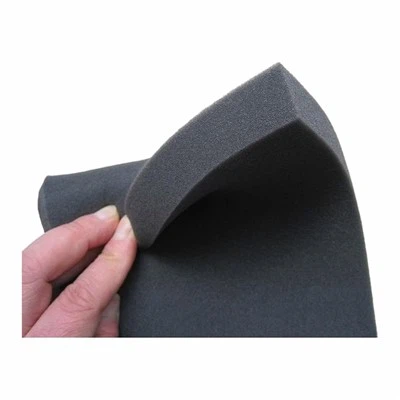
Water absorption in cleaning sponges is a process governed by capillary action and the sponge’s porous structure. Capillary action is the ability of a liquid to flow in narrow spaces without the assistance of, or even in opposition to, external forces like gravity. In a sponge, the tiny pores and channels act as these narrow spaces. When a sponge comes into contact with water, the water molecules are attracted to the walls of these pores due to adhesive forces. At the same time, the water molecules are attracted to each other by cohesive forces. This combination of adhesive and cohesive forces allows the water to climb up the pores and fill the sponge.
The porous structure of a sponge is also a key factor in its water absorption capacity. Sponges are made up of a network of interconnected pores of varying sizes. Larger pores can hold more water, but they also allow water to drain out more easily. Smaller pores, on the other hand, can hold water more tightly but may limit the overall amount of water that can be absorbed. A good cleaning sponge strikes a balance between these two factors, with a mix of large and small pores to maximize water absorption and retention.
Factors Affecting Water Absorption
Several factors can affect the water absorption capabilities of a cleaning sponge. These include the material of the sponge, its density, and its surface area.
- Material: Different materials have different water absorption properties. For example, natural sponges, which are made from the fibrous skeletons of marine animals, are known for their excellent water absorption capabilities. They have a highly porous structure that allows them to absorb large amounts of water quickly. Synthetic sponges, on the other hand, can be made from a variety of materials, such as polyurethane, cellulose, or polyester. Each of these materials has its own unique water absorption characteristics. Polyurethane sponges, for instance, are often very soft and flexible, and they can absorb a significant amount of water. Cellulose sponges are known for their strong capillary action and ability to hold water tightly.
- Density: The density of a sponge refers to the amount of material packed into a given volume. A denser sponge will generally have fewer pores and less space for water to be absorbed. However, a very low-density sponge may not be able to hold the water effectively and may allow it to drain out quickly. The ideal density for a cleaning sponge depends on its intended use. For example, a sponge used for mopping floors may need to be more dense to hold a large amount of water, while a sponge used for delicate cleaning tasks may be less dense for better control.
- Surface Area: The surface area of a sponge also plays a role in its water absorption. A sponge with a larger surface area will have more contact with the water, allowing it to absorb water more quickly. This is why many cleaning sponges are designed with a textured or ridged surface. These features increase the surface area of the sponge and enhance its water absorption capabilities.
Our Cleaning Sponges: Exceptional Water Absorption
At our company, we take pride in offering cleaning sponges that are designed to absorb water exceptionally well. We use high-quality materials and advanced manufacturing processes to ensure that our sponges have the optimal combination of porosity, density, and surface area.
Our synthetic sponges are made from a blend of materials that have been carefully selected for their water absorption properties. The polyurethane component provides softness and flexibility, allowing the sponge to conform to different surfaces and absorb water easily. The cellulose component adds strong capillary action, ensuring that the water is held tightly within the sponge. This combination of materials allows our sponges to absorb large amounts of water quickly and hold it securely, even when squeezed.
In addition to the material, we also pay close attention to the design of our sponges. Our sponges have a unique texture that increases their surface area, allowing them to absorb water more efficiently. The texture also helps to trap dirt and debris, making the sponge more effective at cleaning.
We conduct rigorous testing on our sponges to ensure that they meet our high standards for water absorption. We measure the amount of water that a sponge can absorb in a given time and compare it to industry benchmarks. Our sponges consistently outperform many of our competitors, demonstrating their superior water absorption capabilities.
Real-World Applications
The excellent water absorption capabilities of our cleaning sponges make them suitable for a wide range of applications. Here are some examples:
- Household Cleaning: Our sponges are perfect for everyday household cleaning tasks. Whether you’re wiping down countertops, cleaning the sink, or mopping the floor, our sponges can absorb and hold large amounts of water, making the cleaning process faster and more efficient.
- Industrial Cleaning: In industrial settings, our sponges can be used for cleaning machinery, equipment, and floors. Their high water absorption capacity allows them to quickly clean up spills and messes, reducing the risk of damage and contamination.
- Automotive Cleaning: Our sponges are also great for cleaning cars. They can be used to wash the exterior, clean the interior, and even dry the car after washing. The soft and flexible nature of our sponges ensures that they won’t scratch the car’s surface, while their excellent water absorption capabilities make the cleaning process easier and more effective.
Conclusion

In conclusion, cleaning sponges can absorb water well, but the extent to which they do depends on several factors, including the material, density, and surface area of the sponge. At our company, we’ve dedicated ourselves to producing cleaning sponges that offer exceptional water absorption. Our sponges are made from high-quality materials, have an optimized design, and are rigorously tested to ensure their performance.
Foam Sponge If you’re in the market for cleaning sponges that absorb water effectively, we invite you to contact us for a procurement discussion. We’re confident that our products will meet your needs and exceed your expectations. Whether you’re a small business looking for a reliable cleaning solution or a large corporation in need of bulk supplies, we’re here to help.
References
- Callister, W. D., & Rethwisch, D. G. (2010). Materials Science and Engineering: An Introduction. Wiley.
- Israelachvili, J. N. (2011). Intermolecular and Surface Forces. Academic Press.
- Scherer, G. W. (1990). Porous Ceramics. Annual Review of Materials Science, 20(1), 53-78.
Jiangsu Palatus Latex Products Co., Ltd.
As one of the leading cleaning sponge manufacturers and suppliers in China, we warmly welcome you to buy discount cleaning sponge from our factory. All customized products are with high quality and low price. For quotation, contact us now.
Address: No.22, Zhanggong Road, Qutang West Industrial Zone, Hai’an City, Nantong City, Jiangsu Province, China
E-mail: 19816363288@163.com
WebSite: https://www.jsplts.com/
