Hey there! As a supplier of low-speed electric passenger cars, I often get asked about the speed control mechanism in these nifty little vehicles. Today, I’m gonna break it down for you in a way that’s easy to understand. Low-speed Electric Passenger Car
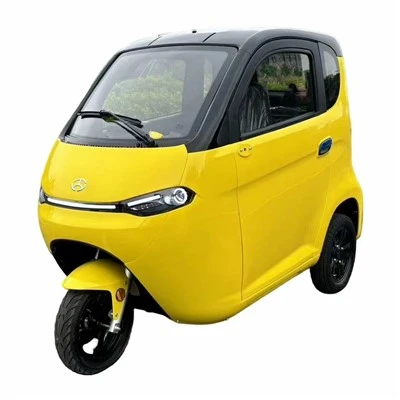
First off, let’s talk about why speed control is so important in low-speed electric passenger cars. These cars are designed mainly for short – range trips, like cruising around a small community, a campus, or a large industrial park. We need to keep the speed at a safe and manageable level to ensure the safety of passengers and pedestrians.
One of the most common speed control mechanisms we use is the throttle controller. It’s like the heart of the speed – regulating system. The throttle controller is connected to the accelerator pedal in the car. When the driver presses the accelerator pedal, it sends a signal to the throttle controller. This controller then adjusts the amount of electrical power that goes to the motor.
Think of it like the gas pedal in a regular car. The more you press it, the more power is sent to the engine, and the faster the car goes. But in our low – speed electric cars, the throttle controller limits how much power can be sent to the motor to keep the speed within a set range. For example, most of our low – speed electric passenger cars are designed to have a maximum speed of around 25 – 30 miles per hour. The throttle controller makes sure that the car doesn’t go over that limit, no matter how hard the driver presses the accelerator.
Another key part of the speed control system is the motor controller. The motor controller is responsible for managing the electrical power that reaches the electric motor. It controls the speed and torque of the motor based on the signals it receives from the throttle controller.
The motor controller works in a really cool way. It uses a technique called Pulse Width Modulation (PWM). This sounds complicated, but it’s actually pretty simple. PWM is all about controlling the amount of time the electrical power is "on" and "off" to the motor. By changing the ratio of "on" time to "off" time, the motor controller can adjust the average power going to the motor. This, in turn, controls the speed of the motor and ultimately the speed of the car.
Let’s say the throttle controller sends a signal to the motor controller asking for a certain speed. The motor controller then uses PWM to adjust the power supply to the motor to achieve that speed. If the driver wants to slow down, the motor controller reduces the "on" time in the PWM cycle, which decreases the power to the motor and slows the car down.
We also have a speed sensor in our low – speed electric passenger cars. This sensor is usually located on the motor or the wheels. Its job is to measure the actual speed of the car and send that information back to the motor controller.
The speed sensor is super important because it allows the motor controller to make real – time adjustments. For example, if the car is going uphill, the load on the motor increases, and the car might start to slow down. The speed sensor detects this drop in speed and sends a signal to the motor controller. The motor controller then increases the power to the motor to bring the speed back up to the desired level set by the throttle controller.
In addition to these main components, we also have a speed limiter in our cars. The speed limiter is a software – based safety feature that sets an absolute maximum speed for the vehicle. It acts as a backup to the throttle controller and motor controller.
Even if something goes wrong with the throttle or motor control system, the speed limiter will kick in and prevent the car from going over the pre – set maximum speed. This is a crucial safety measure, especially when it comes to low – speed vehicles that are often driven in areas with a lot of foot traffic.
Now, you might be wondering how we test and calibrate these speed control mechanisms. Well, in our factory, we have a state – of – the – art testing facility. We put each car through a series of tests on a specially designed track.
During these tests, we check the accuracy of the speed sensor, the responsiveness of the throttle controller and motor controller, and the effectiveness of the speed limiter. We make sure that all these components work together seamlessly to provide a smooth and safe driving experience.
We also regularly update the software in the motor controller and speed limiter to improve performance and add new safety features. This ensures that our low – speed electric passenger cars are always at the cutting edge of technology in terms of speed control.
So, there you have it! That’s a basic rundown of the speed control mechanism in our low – speed electric passenger cars. It’s a combination of mechanical, electrical, and software components working together to keep the car at a safe and efficient speed.
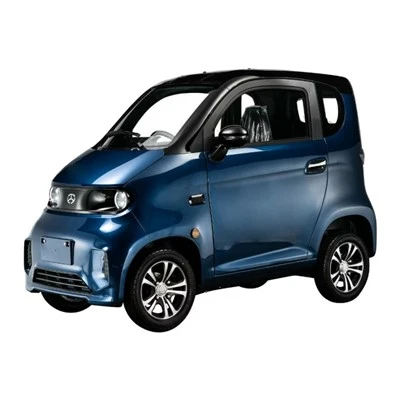
If you’re in the market for a reliable low – speed electric passenger car, whether it’s for a residential community, a school campus, or an industrial complex, we’ve got you covered. Our cars are built with top – notch speed control systems to ensure a safe and enjoyable ride. We’d love to talk to you about your specific needs and how our cars can fit into your operations. So, don’t hesitate to reach out to us for a procurement discussion. We’re here to help you make the best choice for your transportation needs.
Low-speed Electric Delivery Car References
- "Electric Vehicle Technology Explained" by Jesus del Pilar
- "Automotive Electrical and Electronic Systems" by William Ribbens
Taizhou Xiangyuan New Energy Technology Co., Ltd.
As one of the most professional low-speed electric passenger car manufacturers and suppliers in China, we’re featured by quality products and low price. Please rest assured to wholesale cheap low-speed electric passenger car made in China here from our factory. Contact us for customized service and pricelist.
Address: NO.7HUANGJIN ROAD,METAL RESOURCES RECYCLING INDUSTRY BASE, LUQIAO, TAIZHOU, ZHEJIANG
E-mail: order@jiajiev.com
WebSite: https://www.jiaji-ev.com/
