Let’s cut to the chase—if you’re anything like most contractors, landscapers, or even the weekend warrior who’s got a shed full of half-dead power tools, camera gear, and those random flashlights that always die right when you need them, you’ve probably wasted way too much time hunting for the right charger. I’m the guy who runs a small, reliable multi battery charger supply company—been at this for 12 years, fixing charger headaches before they start—and I get it. Most people don’t realize that a “multi battery charger” isn’t just some random box that charges whatever you stick in it. It’s a precision tool, and getting the right one means knowing exactly what types of batteries it can (and can’t) handle. Let’s break this down, no jargon, no fluff. Multi Battery Charger
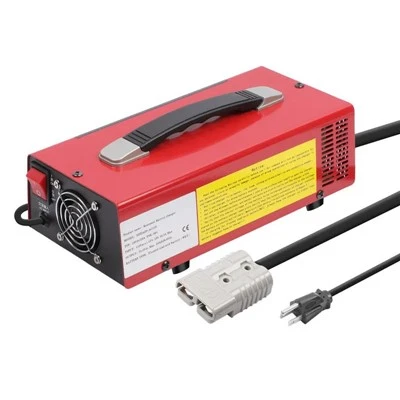
First, let’s start with the batteries that matter most to our customers, because that’s what actually keeps your gear running. For the longest time, the go-to for power tools, consumer electronics, and even small appliances was NiCd—nickel-cadmium. We still see NiCd in old drills and garage sale power tools, and honestly, they’re tough. They can handle high discharge rates, are cheap to make, and hold up to extreme cold. But they have that pesky memory effect—if you charge them before they’re totally dead, they “forget” their full capacity over time. A lot of multi battery chargers still support NiCd because even though newer chemistries are popular, millions of these batteries are still in use. Our chargers, for example, have a dedicated NiCd mode that conditions the battery before charging to fight that memory effect, which most basic chargers skip. That’s the kind of thing that makes a difference when your old drill used to go through a whole project on one charge, but now dies halfway—our charger brings it back to almost original capacity.
Next up is NiMH—nickel-metal hydride. These are the upgrade from NiCd, right? No memory effect, higher energy density, so they hold more charge in the same size, and they don’t have that toxic cadmium stuff. You’ll find NiMH in newer power tools, cordless phones, digital cameras, and those AA/AAA rechargeable packs everyone has lying around. The catch with NiMH is that they need a more precise charging profile than NiCd. Charge them too fast, and they overheat; charge them too slow, and they don’t get a full charge. A good multi battery charger has separate algorithms for NiMH vs. NiCd, and that’s non-negotiable. I’ve had customers come to us with chargers that say they “do NiMH” but kill their camera batteries in a week—because the algorithm was just the old NiCd one modified, not a real NiMH profile. Our chargers have three different NiMH settings, actually: one for AA/AAA, one for 7.2v to 18v power tool packs, and even one for larger 24v mobility scooter batteries. That level of customization is what sets a real multi charger apart from a cheap off-brand one.
Now, the big one that everyone’s talking about these days: lithium-ion (Li-ion). This is the chemistry that’s revolutionized everything, from smartphones to electric chainsaws to even e-bikes. Li-ion has way higher energy density than NiMH or NiCd, no memory effect, and self-discharge is super low—like 2-3% a month, vs. NiMH which can lose 20% in a week. But Li-ion is also the most finicky of the bunch. They’re highly sensitive to overcharging, overheating, and deep discharging—all of which can cause permanent damage, or even (in worst cases) a fire. That’s why any multi battery charger worth its salt has to have multiple safety features for Li-ion: over-voltage protection, temperature monitoring, and a trickle charge mode once the battery hits full capacity. Most importantly, Li-ion batteries have different cell configurations—single-cell (like phone batteries), multi-cell packs in series (like 18v power tool batteries, which are usually five 3.6v cells in a row), and even parallel packs. A bad charger will try to charge a 18v Li-ion pack like a 12v one, and that’s a disaster. We design our chargers with automatic cell detection for Li-ion packs, so they read the battery’s internal code to figure out voltage and cell count, then adjust the charge rate accordingly. No more guessing, no more wasted batteries.
Wait, but what about Li-polymer (LiPo)? A lot of people mix LiPo and Li-ion up, and they’re similar, but there’s a key difference. LiPo uses a gel-like electrolyte instead of liquid, so they can be shaped into weird, thin forms—think of the slim batteries in your tablet or a RC car battery pack. LiPo is also more sensitive to charging rates than traditional Li-ion, and they require even more precise voltage control. A lot of multi chargers skip LiPo because it’s a smaller market segment, but if you’re into RC hobbies, or use portable tablets for field work, our chargers support LiPo too—we’ve got a dedicated LiPo mode that handles the lower charge currents they need, plus those same safety features to prevent swelling or damage. I learned about LiPo the hard way, actually—10 years ago, I picked up a cheap charger for my son’s RC truck, and it overcharged the LiPo pack, making it swell up like a balloon. Cost me $40 for a new battery, and that’s when I realized how important specific LiPo settings are. Now we make sure all our multi chargers cover that, no exceptions.
Okay, so what about the stuff that most people ask about but really shouldn’t be trying to charge on a multi battery charger? Lead-acid batteries. You know, the ones in car batteries, lawn mowers, boat batteries. I get it—they’re big, they’re lead-acid, so people think they’re similar to other batteries. But lead-acid has a totally different charging profile. It needs a bulk charge, then an absorption charge, then a float charge to keep it topped off. Trying to charge a 12v car battery on a standard multi battery charger? It’ll either undercharge it and it’ll die in a week, or overcharge it and corrode the plates. Same with gel cell and AGM lead-acid—they need their own dedicated chargers. We get this question all the time, and we’re honest about it: if you need to charge a car battery, go get a lead-acid charger, don’t waste your time on a multi battery one. That’s not a knock on lead-acid chargers—they’re great at what they do, they’re just not designed for the chemistries our multi chargers handle.
Another big one: newer lithium iron phosphate (LiFePO4) batteries. These are becoming more popular for solar setups, RVs, and electric golf carts because they’re super safe, have a long lifespan, and can handle deep discharges. They’re a type of Li-ion, but their charging profile is different enough that generic Li-ion chargers won’t work right. LiFePO4 needs a lower float voltage and a different charge termination point. A few years back, we got a lot of calls from campers who had generic Li-ion chargers killing their RV LiFePO4 batteries, so we updated our chargers to include a dedicated LiFePO4 mode. Now that’s one of our most requested features, and honestly, it’s what makes our multi charger stand out from the big box store ones that only cover basic Li-ion.
Let me talk about how this works in real life, because numbers don’t mean anything if they don’t translate to your use case. Last month, I had a customer who runs a landscaping company. He had 22 power tools: 10 NiCd old drills, 8 NiMH hedge trimmers, and 4 Li-ion chainsaws. He was using three different chargers, and spent 45 minutes a day switching between them. He bought our top-of-the-line multi battery charger, and now he can charge all 22 batteries in one place, no switching. The NiCd drills are holding a charge 30% longer than before, the NiMH hedge trimmers no longer overheat while charging, and the Li-ion chainsaws haven’t had a single cell failure since he started using our charger. That’s the kind of result we care about, not just “our charger can charge 100 battery types on paper.”
Another example: a wedding photographer I work with. She uses a mix of AA NiMH for her flash triggers, a Li-ion battery for her full-frame camera, and a LiPo battery for her portable monitor. She used to have five chargers in her camera bag, and on a 12-hour wedding shoot, she’d get caught with a dead monitor battery because the charger was too slow. She got our compact multi charger, charges all three batteries at once, and hasn’t had a dead gear mid-wedding in six months. That’s exactly what a multi battery charger is supposed to do—eliminate the clutter and the stress of dead batteries.
Now, let’s get down to what to look for when you’re shopping for a multi battery charger, because not all of them cover every type we talked about. First, check the supported chemistries: don’t just look for “multi” on the box, make sure it lists NiCd, NiMH, Li-ion, LiPo, and LiFePO4 if you need those. Second, look for cell detection and safety features: automatic voltage and cell count sensing, overcharge protection, temperature monitoring. Cheap chargers skip all that to cut costs. Third, think about capacity: how many batteries do you need to charge at once? If you’re a homeowner, a 4-bay charger is fine. If you run a business, you’ll want a higher bay count, maybe even fast charge settings to top off multiple batteries overnight or during lunch.
At the end of the day, the whole point of a multi battery charger is to simplify your life, not add more work. If you’re tired of keeping track of multiple chargers, wasting money on dead batteries, or missing critical jobs because your gear dies, it’s time to upgrade. We’ve spent 12 years refining our chargers to cover all the common battery types, with the safety and reliability you can count on. Whether you’re a weekend warrior, a small business owner, or a professional tradesperson, we have a multi battery charger that fits your needs.

If you’re ready to stop dealing with bad chargers and dead batteries, we’d love to talk through what’s right for you. Reach out to our team to discuss your specific battery needs, and we’ll help you find the perfect charger without the hype or sales pressure. We’ve built our reputation on being honest, transparent, and focused on solving real battery problems, and we’d be happy to do the same for you.
Votage Stabilizer References:
- Linden, D., & Reddy, T. B. (2002). Handbook of Batteries (3rd ed.). McGraw-Hill.
- American National Standards Institute (ANSI). (2019). Safety Standard for Portable Battery Chargers and Battery Packs. ANSI/C18.1M-2019.
- Baghdadi, M., et al. (2018). Lithium-Ion Battery Charging Protocols: A Review. Journal of Power Sources, 389, 28-41.
- NiMH Battery Association. (2020). Best Practices for Nickel-Metal Hydride Battery Charging. International Nickel, Zinc, and Cobalt Association.
- LiFePO4 Battery Council. (2021). Charging Guidelines for Lithium Iron Phosphate Batteries. Battery Safety Institute.
Huizhou Qiangfeng Power Technology Co., Ltd.
Huizhou Qiangfeng Power Technology Co., Ltd. is one of the most professional multi battery charger manufacturers and suppliers in China, featured by quality products and good service. We warmly welcome you to buy customized multi battery charger made in China here from our factory. If you have any enquiry about quotation and free sample, please feel free to email us.
Address: No. 28, Hu’ao Avenue, Shiwan Town, Boluo County, Huizhou City, Guangdong Province
E-mail: Komco@Jinlidianqi.cn
WebSite: https://www.autobatterychargers.com/
