When I first started working with fruit jam producers back in 2008, I didn’t realize how big a difference scale makes—until I watched a small-batch artisanal maker I’d partnered with try to ramp up production for a local grocery chain. They thought all they needed was “a bigger pot,” and ended up burning three batches of strawberry jam, wasting 200 pounds of fresh berries, and missing their delivery deadline. That day, I learned there’s more to a fruit jam processing line than just mixing fruit and sugar. Today, as a supplier of custom processing lines, I field this question every week: What’s the real difference between a small-scale and a large-scale fruit jam line? It’s not just about size. It’s about consistency, efficiency, food safety, and what a producer actually needs to run their business. Let’s break it down the way I see it, from years of walking production floors with both startup teams and national brands. Fruit Jam Processing Line
First, let’s define what we mean by small-scale. For me, small-scale lines are built for producers making less than 5,000 kilograms of jam per month. Think artisanal brands, farm stands, small local distributors—operations where the founder is probably still stirring a pot, cleaning jars at midnight, or handing off a batch to a regular customer. The core of a small-scale line is flexibility. I once installed a line for a family in Vermont who makes 100% maple-raspberry jam with berries picked from their own farm. Their line doesn’t have heavy automation; it’s a semi-automatic setup with a fruit washer that can handle 20 kilograms of berries at a time, a steam cooker (not a big industrial kettles), a batch mixer, a hand-operated filler, and a small countertop jar sealer. The key here is that this line can switch between flavors in an hour. Last month, that family made peach jam one week and blueberry-lavender the next without having to take a full day to sanitize and reconfigure equipment. Small-scale lines are designed for customization, which is non-negotiable for brands that build their identity on unique, small-batch flavors.
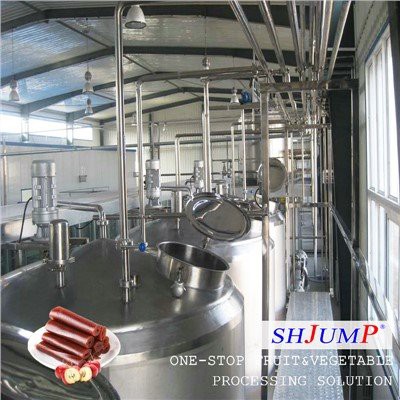
Large-scale lines, by contrast, are built for producers making 50,000 kilograms or more per month—think national grocery chains, brands distributing across multiple countries, or even private label operations for major retailers. These lines are all about continuous flow. When I worked with a mid-sized national jam brand expanding to the West Coast, their line was a 240-meter continuous system that runs 12 hours a day, 5 days a week, with zero stops for flavor changes. It starts with a bulk fruit washer that processes 2,000 kilograms of berries per hour, goes to a pulper that removes seeds and skin (no hand-seeding here), a vacuum cooker that heats fruit at precise temperatures to retain flavor without burning, an automatic filler that puts exactly 350 grams of jam into each jar, a steam sealer, and a full pasteurization tunnel. The biggest thing here is consistency. No matter where that jar was made—Georgia, Michigan, or California—the color, thickness, and sweetness are exactly the same. That’s non-negotiable for national brands; customers don’t want a jar that’s too runny one month and too thick the next.
But let’s get into the details, because that’s where the real differences show up. Let’s start with fruit preparation, the first step in any jam line. For small-scale, fruit prep is usually manual or semi-automatic. Small producers often sort fruit by hand to remove bad berries, which is fine when you’re working with 200 kilograms a week. The washer is often a simple flotation tank that uses water to separate leaves and stems. Then they may hand-cut large fruit like peaches or remove seeds from strawberries. For large-scale, fruit prep is fully automated. The bulk washer uses rotating screens and air jets to sort fruit by size and remove debris, and optical sorters (yes, actual camera systems) pick out unripe or overripe fruit at 60 pieces per second. Seed removal, skinning, and dicing are all done by specialized machines that can handle thousands of kilograms an hour. The result? Less waste—large lines have about 5% fruit waste, compared to 10-15% for small-scale, because of automated sorting that catches bad fruit before it goes into the cooker.
Next, cooking is the heart of jam making, and this is where I’ve seen the most mistakes when producers mix up small and large scale. Small-scale cooking uses batch cookers—usually stainless steel kettles, either gas or steam-heated, with agitators that stir the jam slowly to prevent burning. The big advantage here is control. A small producer can test the jam’s sugar and pectin content with a refractometer mid-cook, adjust on the fly, and stop the process exactly when it hits the “set point” (usually 65-68% soluble solids, per food safety standards). Large-scale cooking uses continuous vacuum cookers. Vacuum is key here because it lowers the boiling point of water, so jam cooks at around 70-80°C instead of 100°C, which retains more fruit flavor and color. The continuous system feeds fruit and sugar in a steady stream, cooks it, and discharges it in minutes, not hours. The downside? Less flexibility. You can’t stop a continuous cooker mid-process to adjust sweetness, so formulations have to be exactly consistent every time. That’s why large brands use fixed recipes—they don’t want variability that could lead to consumer complaints.
Filling and packaging is another huge difference. Small-scale fillers are manual or semi-automatic. A small producer might use a hand-held piston filler that dispenses 250-500 grams of jam, and a bench-top sealer that claps lids on jars. Packaging is often flexible too—they might use glass jars for premium flavors and plastic tubs for value lines, or even print custom labels in small batches to match seasonal promotions. Last year, I helped a small jam brand do a limited-edition pumpkin spice batch with hand-applied kraft paper labels that sold out in two weeks. Large-scale filling is fully automatic. Piston fillers that can put 100 jars per minute, synchronized with a capping machine that seals lids at the same speed. Packaging is standardized—usually glass jars in pre-approved sizes, with labels printed in large runs to keep costs low. These lines can also handle secondary packaging: putting jars into cartons, adding shipping labels, even palletizing finished product without human intervention. The trade-off here is less flexibility in packaging, but much higher throughput. A small line might fill 1,000 jars a day; a large line can fill 120,000 jars a day.
Food safety and quality control is the area I take most seriously, because bad jam can make people sick. Small-scale lines are usually designed for small-batch food safety. They have easy-to-clean equipment (no hard-to-reach pipes or crevices), and most small producers do in-house testing for pH and mold. But because they often handle less volume, they can struggle with consistent sanitation—sometimes cutting corners on cleaning between batches to save time. Large-scale lines are built to meet strict regulatory standards, like FDA’s Food Safety Modernization Act (FSMA) or EU Food Safety Authority (EFSA) rules. They have CIP (Clean-in-Place) systems that automatically pump sanitizing solution through pipes and equipment, so you don’t have to take apart machinery to clean it. There are also more quality checkpoints: after cooking, a viscosity meter checks thickness; before filling, a metal detector catches any foreign material; after sealing, a vacuum tester makes sure lids are tight. Last year, a large brand I work with had a metal detector catch a tiny piece of machinery part that no human would have seen—something that would have been missed in a small line. That’s a non-negotiable for brands that distribute widely.
Cost is obviously a big factor too, but it’s not just about the initial investment. Small-scale lines usually cost between $15,000 and $50,000, depending on features. They’re modular, so a producer can start with a basic setup and add equipment as they grow. A friend of mine started with a single steam kettle and hand filler for $12,000, then added a small washer and sealer a year later when demand picked up. Large-scale lines, by contrast, start at $200,000 and can go into the millions. They’re big, take up 1,000 square meters or more of production space, and require dedicated staff to run and maintain. But the per-kilogram production cost is much lower for large lines—less labor, less waste, higher throughput means lower overhead. That’s why national brands can sell jam for $3 a jar and still make a profit, while small brands often charge $5-$7 a jar to cover higher production costs.
Here’s the thing I always tell producers: the line that works best is the one that matches their current and future needs. I’ve had small brands come to me asking for a large line because they think it will make them “look bigger,” only to realize they can’t fill it or switch flavors fast enough. I’ve also had large brands try to use a small line for a test batch of a new flavor, only to get inconsistent results because the small kettle can’t process enough volume to hit the correct set point. The sweet spot? If you’re making less than 5,000 kilograms a month, small-scale is almost always the right call—you get flexibility, lower upfront cost, and the ability to build your brand without overinvesting. If you’re making 50,000 kilograms or more, large-scale is the way to go for consistency and efficiency that can support national distribution.
But wait—what about the middle ground? I’ve installed semi-continuous lines for brands making 10,000 to 30,000 kilograms a month, which blend features of both. These lines have automated fruit prep and continuous cooking, but still allow for some flavor adjustments. They’re perfect for brands that want to grow beyond local sales but aren’t ready for full large-scale investment. A great example is a brand I worked with in Ohio that distributes to 12 states. Their line is semi-continuous: they run 2 batches a day, switch flavors overnight with a 2-hour sanitization process, and can make 25,000 kilograms a month. It’s not small, not large, and exactly what they needed to scale without losing their brand identity.
At the end of the day, my job as a supplier isn’t to sell the biggest line possible. It’s to listen to what a producer needs today, and what they want to do next year, and build a line that fits. I’ve seen too many producers burn out because they bought a line that was too big, or miss out on growth because their line was too small. The difference between small and large isn’t just the number of kilograms per hour. It’s about flexibility vs. consistency, customization vs. throughput, and the ability to grow without outgrowing your equipment.

If you’re a jam producer trying to figure out which line is right for you—whether you’re just starting out or looking to scale—reach out. I’ve walked a hundred production floors, I’ve seen the mistakes, and I can help you build a line that works for your brand, not against it. We don’t do one-size-fits-all, because jam isn’t a one-size-fits-all product. It’s made with care, whether it’s a small batch from a family farm or a large run for national shelves, and your line should reflect that.
Food Drying Machine References
- U.S. Food and Drug Administration. (2023). Food Safety Modernization Act (FSMA) Preventive Controls for Human Food.
- European Food Safety Authority. (2022). Scientific Opinion on Microbiological Risk Assessment of Jam and Fruit Spreads.
- Food and Agriculture Organization of the United Nations. (2021). Small-Scale Fruit Processing: A Guide for Producers.
- International Fruit and Vegetable Juice Association. (2020). Standard for Jams, Jellies, Marmalades and Similar Products.
- National Center for Appropriate Technology. (2022). Small-Scale Food Processing Equipment Guide.
Shanghai Jump Machinery & Technology Co., Ltd.
Shanghai Jump Machinery & Technology Co., Ltd. is one of the most professional fruit jam processing line manufacturers and suppliers in China, featured by good service and competitive price. Please rest assured to buy high quality fruit jam processing line for sale here from our factory.
Address: No. 58, Pengqing Road, Kunshan Town, Suzhou District, Jiangsu Province, China
E-mail: info@sinojump.com
WebSite: https://www.shjumpmachine.com/
