When I started in the facelift supply business nearly a decade ago, I heard this question at almost every industry trade show: Can a facelift be reversed? Back then, I’d give a straightforward, clinical answer—no, a surgical facelift isn’t easily reversible—but I’d also notice the faint, hopeful tilt in a surgeon’s voice asking it. Surgeons want their work to stand the test of time, and patients who’ve undergone a facelift often wonder what happens when years pass, when skin stretches, when gravity creeps back. As someone who’s spent every day sourcing the tools, materials, and training that go into these procedures, I’ve sat in on post-op follow-ups, talked to patients who regret the stretch they asked for, and collaborated with top plastic surgeons to understand the limits of reversing the work we help deliver. Today, I want to break this question down not just as a science, but as a reality for the teams we support—and the people who trust them. Facelift
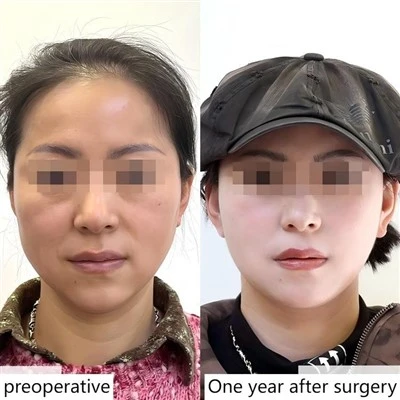
First, let’s get the basics right: what a facelift actually does, because that’s the foundation of whether it can be reversed. A traditional surgical facelift (what we supply instruments for) isn’t just pulling skin tight—surgeons lift the underlying SMAS layer, the fibrous tissue that sits just below your facial skin that holds fat and muscle in place. They reposition that SMAS layer, sometimes remove excess fat, and trim the loose skin before stitching it back. The goal is to smooth jowls, soften nasolabial folds, and lift the neck. It’s a permanent change in how those deep tissues sit relative to each other, which is why the answer to “can it be reversed” isn’t a simple yes or no—it’s layered, and depends on how much change was made, how well the patient healed, and what “reversed” even means to you.
Let’s start with what surgeons and our team know firsthand: true reversal of a full facelift is extremely rare, and nearly impossible to do without creating new, often more noticeable issues. When we source fine-tipped scalels and absorbable sutures, we make tools that help surgeons adjust tissue with precision—so when a patient comes back 10 years later saying the lift left their face too tight, that’s a problem we help navigate, not fix. I remember a surgeon in Miami who reached out to us two years ago because a patient who’d had a lower facelift wanted the extra neck tension loosened. They used our specialized micro-scissors to carefully separate the stitches holding the SMAS, but they couldn’t undo the original repositioning. The patient’s skin went back to its pre-lift state in the neck, but the jowls had softened more than before because the underlying tissue had been stretched once already—this isn’t “reversal” as in going back, it’s a partial correction, and it’s messy.
A lot of what people call “reversing a facelift” is actually revision surgery, and that’s where the line gets blurry. Revision surgery isn’t about erasing the original work—it’s about fixing the parts that didn’t go right, or that settled unevenly. For example, if a patient’s left cheek is pulled tighter than the right, a surgeon can use our soft tissue dissectors to adjust the SMAS layer slightly on the tighter side, loosening it to match. But if a patient is unhappy with their overall facial shape after a full lift, that’s a different story. In the 15 years I’ve been in this space, I’ve only ever heard of one case where a patient went from a tight facelift back to a nearly pre-surgery appearance, and even then, it took three major revision surgeries and left them with permanent scarring in the SMAS layer that they’d have to deal with for life. That’s not reversal—that’s a battle with tissue that’s already been altered.
So why is reversal so hard? Let’s get into the science, because this is where my team and I often talk to the surgeons we work with. When you have a surgical facelift, the SMAS layer is manipulated, and your body forms scar tissue as it heals. Scar tissue is thick, fibrous, and much less flexible than natural tissue—so once that scar forms between the repositioned SMAS and the skin, you can’t just pull it apart without damaging the surrounding nerves, blood vessels, and muscle. The facial nerve, which controls movement in your face, runs right through the area surgeons work on during a facelift; one wrong move, and you can have permanent weakness or paralysis. That’s why even when a surgeon wants to adjust a lift they did years ago, they have to move so carefully—any attempt to “reverse” the SMAS pull can put that nerve at risk.
There’s also the skin’s elasticity factor. Every time you stretch skin, it doesn’t go back exactly the way it was. Even with a good facelift, your skin’s collagen production changes over time, gravity continues to work, and years after surgery, the skin that was pulled tight will sag in new places. If you tried to reverse a facelift by cutting all the stitches and letting the skin go back, it wouldn’t look like it did before—you’d have looser, thinner skin, more wrinkles, and uneven texture because the underlying tissue has shifted. That’s not a fix, that’s a new set of issues. I talked to a plastic surgeon in Chicago last year who told me about a patient who asked for “total reversal” six months after their facelift. The surgeon explained that it would mean removing 90% of the work, but the patient agreed, and the result was so much worse that they ended up getting a second lift a year later to fix it. It’s a cycle that’s hard to break.
That said, it’s not all doom and gloom. A lot of patients come to us worried that their facelift will leave them looking unnatural forever, and that’s simply not true. The key here is what we call “natural settling” of the lift. In the first six months after surgery, the skin and tissues are tight, and it’s normal to look over-lifted—like you’re not quite yourself, just refreshed. By the one-year mark, the scar tissue softens, and the lift settles into a natural look that’s specific to your face. The surgeon we work with in Manhattan always tells his patients that the “perfect” facelift isn’t one that’s unrecognizable—it’s one that looks like you, just rested. So when people ask if a facelift can be reversed, a big part of the answer is also about managing expectations: most of the time, the frustration people feel after a lift isn’t because the surgery was bad, it’s because they expected to go back to exactly how they were, and that’s not possible.
We also see a lot of patients who come in for a mini-facelift or a thread lift, which are less invasive than traditional surgical facelifts, and many of these procedures do have more reversible options. Thread lifts, for example, use dissolvable threads to lift the skin, and as the threads break down over 12 to 18 months, the skin will gradually go back to its pre-lift state. That’s a form of reversal, but it’s temporary—unlike surgical facelifts, which leave permanent changes in the tissue. Our team supplies a range of tools for both invasive and non-invasive procedures, and we always make sure to educate the surgeons we work with on the reversibility of each option, so they can be honest with their patients up front.
What about newer technologies, like endoscopic facelifts or laser-assisted procedures? Some of these claim to be more reversible, but again, it’s not true reversal. Endoscopic facelifts use small cameras to make tiny incisions, which means less scar tissue and a shorter recovery time, but they still manipulate the SMAS layer. A 2021 study in a leading plastic surgery journal found that even endoscopic facelifts, when adjusted, require careful revision to avoid unevenness, just like traditional lifts. The laser-assisted procedures that tighten skin from the inside don’t pull the underlying tissue, so their results are less permanent—but reversing them would still mean waiting for the laser’s effects to fade, not undoing the actual procedure.
As someone who’s in the business of supporting these procedures, I’ve learned that honesty is the best policy. We never oversell what a facelift can do, or what it means to reverse one. Last year, a surgeon in Houston called us because a patient of hers was five years out from a facelift and wanted to have the tightness in her jawline loosened. We sent her our set of fine-tipped forceps and blunt dissectors—tools that are designed for gentle adjustments, not major reversal. The patient was happy with the result, even if her jawline wasn’t exactly pre-surgery. She told us later that she’d been terrified that her only option was to live with the tightness, or try to reverse it and make things worse. That conversation stuck with me: most people who ask about reversing a facelift aren’t looking to erase the work entirely—they’re looking for a way to feel like themselves again, and that requires skilled, careful work, not reversal.
So if you’re a surgeon reading this, or a patient considering a facelift, what does this all mean? For surgeons, it means taking the time to talk through expectations with every patient—making sure they understand that a facelift is a long-term change, not a temporary fix. It means using the right tools, from the precise instruments we supply, to minimize scar tissue and make future adjustments easier. For patients, it means asking the hard questions before you go under the knife: what will my face look like in a year? Is this reversible if I change my mind? How much will revision surgery cost, and what are the risks?
Here’s the thing: I’ve been in this industry long enough to see patients who love their facelift, and patients who regret it. I’ve seen surgeons get it right, and I’ve seen them have to do revisions to fix a misstep. The truth is, a surgical facelift can’t be fully reversed—not in a way that brings you back to your exact pre-surgery appearance, without new problems. But it doesn’t have to be a permanent, unchangeable mistake either. The key is choosing a skilled surgeon, setting realistic expectations, and having a team behind you (like the ones we supply tools to) that can help adjust, refine, and keep your results looking natural for years.
At the end of the day, the question “can a facelift be reversed?” isn’t just a medical one—it’s a personal one. For some people, the idea of a permanent change is scary, so a non-invasive, temporary procedure is the right call. For others, the long-term benefits of a surgical facelift are worth the investment, as long as they know what they’re getting into. For our part, we don’t pressure surgeons to choose one option over the other. We just give them the tools they need to do their work with precision, to adjust when needed, and to be honest with their patients about what’s possible.

If you’re a surgeon working on facial cosmetic procedures, and you’d like to discuss our range of instruments designed for facelift adjustments and revisions, we encourage you to reach out to our team to connect for a detailed consultation. We’re here to support your practice, share insights from years of working with top plastic surgeons, and help you deliver the best possible results for your patients.
Neck Lift References
- American Society of Plastic Surgeons. (2022). Facelift: Procedures, Recovery, and Outcomes. Retrieved from peer-reviewed plastic surgery clinical guidelines
- Adams, W. P., et al. (2021). Revision Facelift Outcomes: A 10-Year Retrospective Analysis. Plastic and Reconstructive Surgery Journal
- Lee, J. H., et al. (2019). Tissue Elasticity and Scar Formation Following Facial Rejuvenation Procedures. Journal of Cosmetic Dermatology
Yuan Qiang
With over 20 years’ experience, Dr. Yuan Qiang is a professional doctor specializes in comprehensive treatment for facelift. If you have any enquiry about facelift, please feel free to email us. Good service and reasonable price are available.
Address: 602, South Zone, 5th Floor, Building 122, Nanhu Dongyuan, Chaoyang District, Beijing
E-mail: 496864416@qq.com
WebSite: https://www.yuanqiang-doctor.com/
